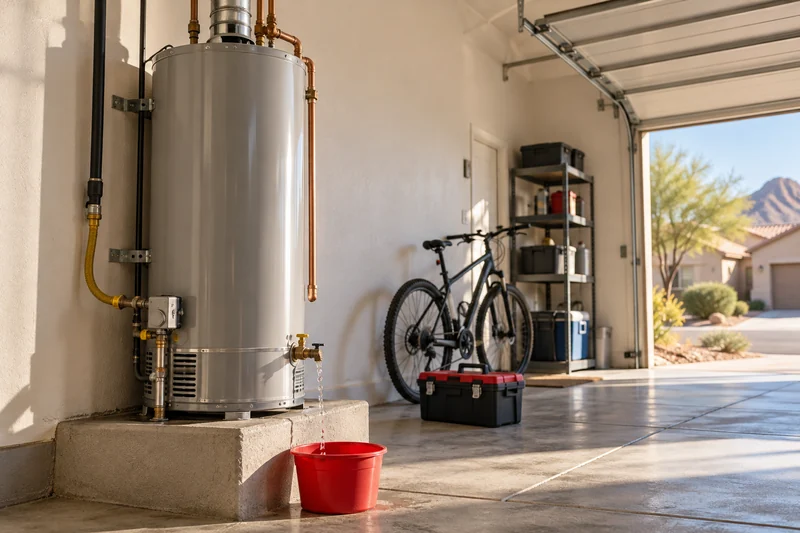
01 · VALVES
A drip at the valve
Drain valves and relief-valve discharge need different checks. The source and operating conditions guide the repair.
Water heater leak repair in Oxford, MA begins with the source, not a guess. Describe the wet area and arrange the next step with an independent provider.
Independent providers · Address-based availability
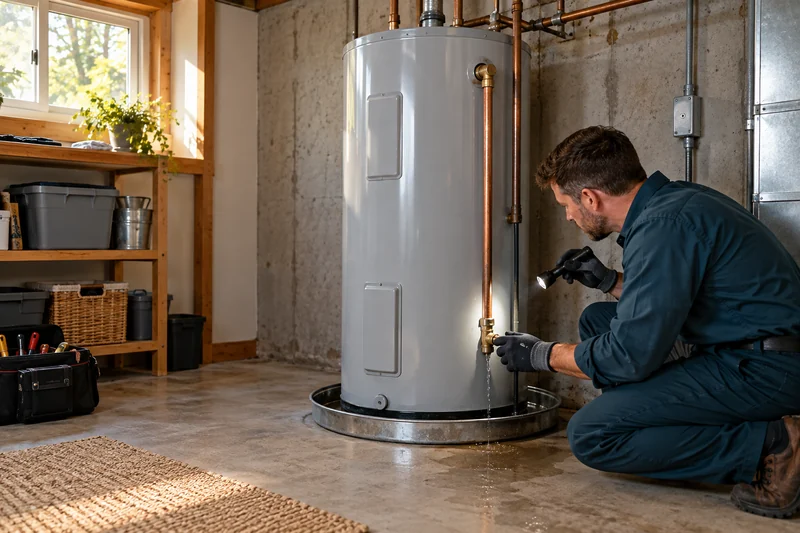
Call with the location of the water and your property address. The accepting provider confirms whether they can help, when they can visit and any assessment charge.
Call to check current availability.
Oxford is listed in our Massachusetts coverage directory under Worcester County. ZIP references in the coverage data include 01540. A city or ZIP match is a starting point; the accepting provider confirms the specific property.
Describe whether the heater is in a garage, basement, closet or shared utility area. Mention stairs, parking restrictions and any water near electrical equipment. A photo of the wet area and the model label can help the provider prepare.
Describe the wet area; let the provider identify the cause. These are parts of one water heater leak repair service.
Drain valves and relief-valve discharge need different checks. The source and operating conditions guide the repair.
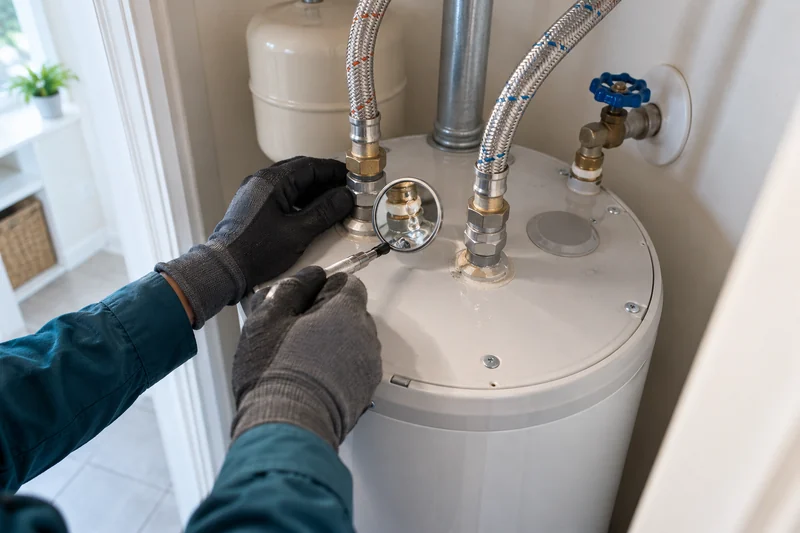
A top connection can send water down the tank jacket. Trace the wet area before assuming the tank has failed.
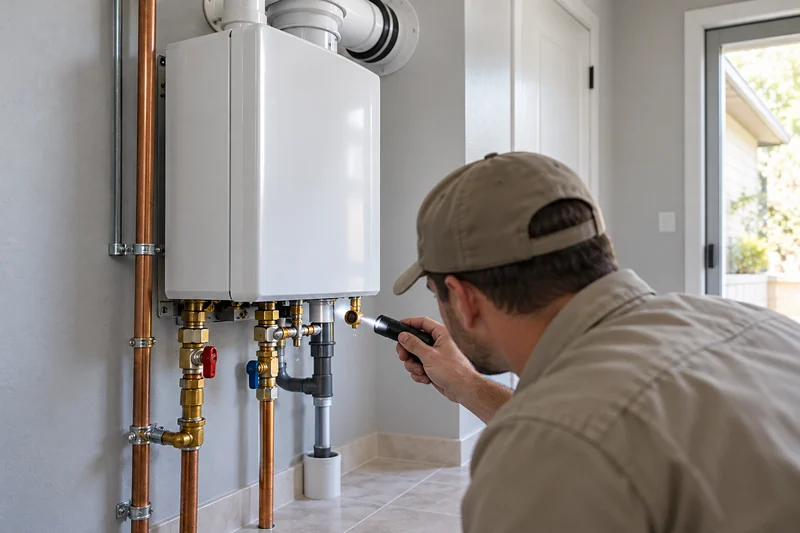
Storage tanks and tankless heaters have different failure points. Equipment condition determines the next step.
The provider adapts the inspection to the heater and conditions at the property. These are assessment questions, not instructions for opening the unit yourself.
Identify tank or tankless equipment, fuel type, the model label and the location of the wet area.
The provider determines suitable isolation and access before inspecting or opening equipment.
Inspect the hot and cold connections and follow water tracks that may run down the outside of the heater.
Where relevant, distinguish a leaking fitting from safety-valve discharge and assess contributing pressure or expansion conditions.
Look at drain valves, accessible gaskets, connection points and tankless fittings as appropriate for the model.
Explain whether the source is repairable, whether additional investigation is needed or whether tank replacement should be discussed.
Confirm the written scope. Ask how the repaired area will be checked after service and what follow-up terms apply.
These symptoms help explain the problem on the call. They do not establish a diagnosis for a particular heater.
Moisture may originate around the hot or cold connection. Tell the provider whether it starts at the pipe, fitting or tank jacket.
A drip or flow from the relief discharge needs assessment of the valve and operating conditions. Never plug or cap the discharge.
Water can appear at the drain outlet or the connection to the tank. Ask whether the valve and surrounding tank connection are serviceable.
A wet pan shows where water collects, not necessarily where it starts. Nearby plumbing, discharge and condensate may also need checking.
An element gasket or another internal connection may need inspection. Leave covers closed and keep away from wet electrical equipment.
Mention water near the small expansion tank or cold-water piping so the provider can consider the connection and system conditions.
Describe whether water is under the wall-mounted unit or at its valves and pipework. The model and source determine the assessment.
Corrosion or a wet seam may indicate tank damage, but water can also travel from above. The provider needs to establish the origin.
Note when the water appears. Condensation, discharge or a leaking connection may behave differently as the heater operates.
An example of an external component repair, shown in the same space from the same viewpoint.
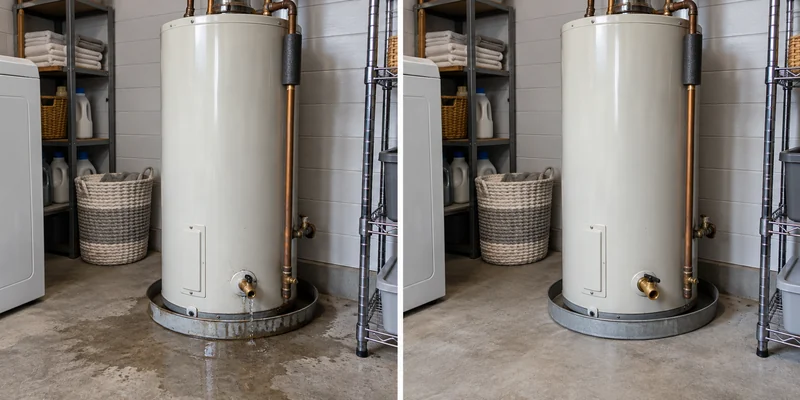
Visible moisture at a serviceable external fitting.
The illustrated fitting is renewed and the area is dry.
Some external valves and connections can be repaired. A corroded tank body generally calls for a different decision. The assessment separates those situations.
The source of the leak determines the work. Request separate assessment, parts and labor details before agreeing to proceed.
Prices and assessment charges are set by the accepting independent provider. This website does not promise a fixed national price, free assessment or same-day appointment.
Use these questions to compare the proposed work and understand what you are authorizing.
Describe where water first appears. Ask the provider to explain the leaking part rather than treating every puddle as a failed tank.
A serviceable external fitting and a leaking tank body call for different work. Ask which option fits the equipment condition.
Recurring discharge may require more than a new valve. Discuss pressure, expansion and model-specific checks with the provider.
Confirm the business identity, relevant credentials, parts, labor, price, testing and follow-up terms in writing.
Give the address, heater type and where water is appearing.
The accepting provider confirms service coverage and a suitable time.
Discuss the source, repair options, written scope and price.
Authorize the work directly and ask about checks and follow-up.
Tell us where water is appearing and whether it is spreading. Keep away from wet electrical equipment and ask for professional assistance.
The housing figures provide area-level context for Oxford. They do not identify the age or condition of the water heater at your address. The median construction year in the source data is 1954. Ask about the heater’s own model label and service history rather than assuming it is the same age as the home. With an estimated 76% single-family share, property access can vary between detached homes and other building types. Mention a shared utility room, upstairs closet or managed-building access when relevant.
Area estimates: U.S. Census ACS 2019–2023, from the supplied research dataset. Figures describe housing in the area, not the specific equipment at your property.Tell the provider whether the heater and connected pipes are indoors, in an unconditioned garage or exposed outdoors. The historical data includes regular freezing nights. If the leak appeared after cold weather, mention the timing and any exposed pipework. Air temperature does not establish tap-water temperature, equipment condition or the cause of a leak.
Open-Meteo historical reanalysis, supplied 2021–2023 location dataset. Historical grid estimates, not current weather or a long-term climate normal.Practical information for the next conversation.
Call with your complete Oxford property address, heater type and the location of the water. The accepting provider confirms service coverage, an appointment and the assessment terms.
An external connection, drain valve or other serviceable component may be repairable. If the tank body is corroded and leaking, the provider will explain why a component repair may not resolve it.
Not necessarily. Water can travel down from a higher connection or discharge point. The source needs to be traced before deciding what has failed.
It can involve the valve, pressure, thermal expansion or temperature conditions. Do not cap a relief valve or its discharge pipe; have the cause assessed.
An independent provider decides whether to accept the request and confirms the appointment. Ask for the business identity, relevant credentials, price and terms before authorizing work.
No appointment is guaranteed here. Availability, parts and travel depend on the accepting provider and your full address.
Keep people away from the wet area and do not touch wet electrical equipment. Get professional assistance. If you smell gas, leave the area and contact the gas utility or emergency services from a safe place.
Describe whether water begins at a hot or cold connection, a valve or the outside of the jacket. Do not loosen fittings or remove covers to investigate.
Tell the provider when the pan fills and whether nearby plumbing or condensate lines are present. Water in the pan alone does not identify the leaking part.
Yes, tankless leak requests are within this website’s service scope. The independent provider confirms model suitability, coverage, access and the assessment terms.
Ask for the diagnosis, parts, labor, assessment charge, any additional work, testing and follow-up terms. Confirm how changes to the scope are authorized.
The answer depends on the leak and equipment condition. Ask a qualified provider for model-specific advice and keep away from wet electrical equipment or hot discharge.
No. A home may have had several replacement heaters. Use the heater model label and available service history, if safely accessible.
Tell us where you see water. Discuss your address, the heater and an assessment with an independent provider.
Have these details ready so the accepting provider can assess the request.
Confirm the provider’s identity, coverage and assessment terms before booking.
Oxford is listed in Massachusetts. ZIP references: 01540.
Directory inclusion does not guarantee acceptance for every property.
Browse service locations